
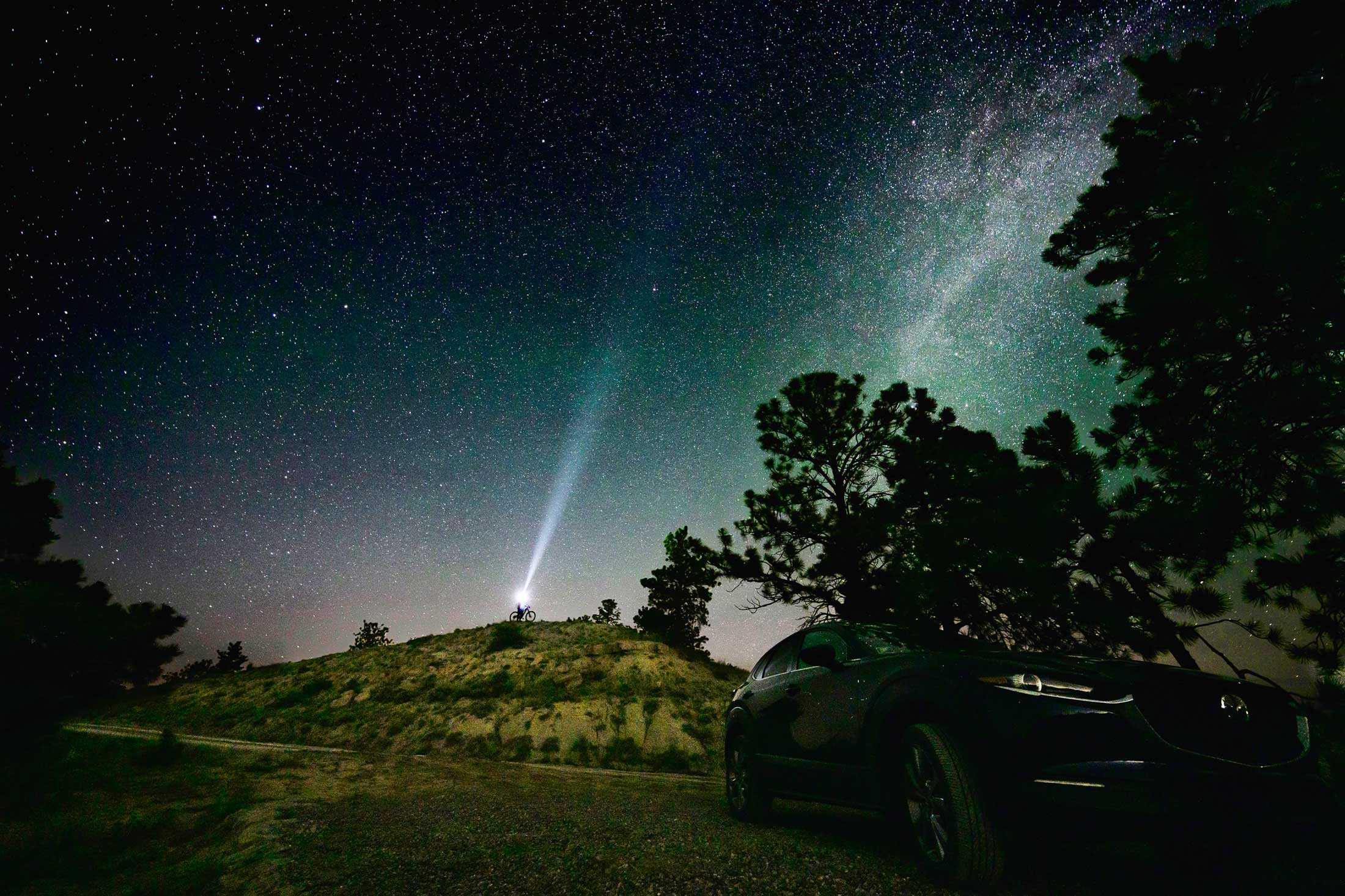
Ian Hanson
You don’t need fancy equipment to have an unforgettable night under Southeast Montana’s skies—but a little preparation goes a long way. Here are a few tips to make the most of your time out here.
It takes 20–30 minutes for your eyes to fully adapt to the dark. Avoid looking at your phone screen or any white light during this time. A red-light flashlight is your best friend—it preserves your night vision while letting you navigate safely.
A full moon is beautiful, but it washes out fainter stars and the Milky Way. For the darkest skies and most dramatic views, plan your visit around a new moon. Many stargazers prefer the three to four nights on either side of the new moon.
Even a short drive from the nearest town makes a significant difference. Our Trail to the Stars sites are specifically chosen for their low light pollution—trust the map and go where it points.
Montana nights cool down fast, even in summer. Bring an extra layer, a blanket and something comfortable to lie on. Stargazing is best done horizontal.
Apps like Star Walk 2, Sky View, Night Sky and Stellarium Mobile can help you identify constellations, planets and satellites in real time. Point your phone at the sky and let it guide you.
Check the weather and air quality before heading out—smoke from wildfires can obscure the sky even on otherwise clear nights. The Smoky Mountain Air Quality Index and local forecasts are good resources.